Why Is the Quinceañera at 15 and Not 16?
· Traditions · 3 min read
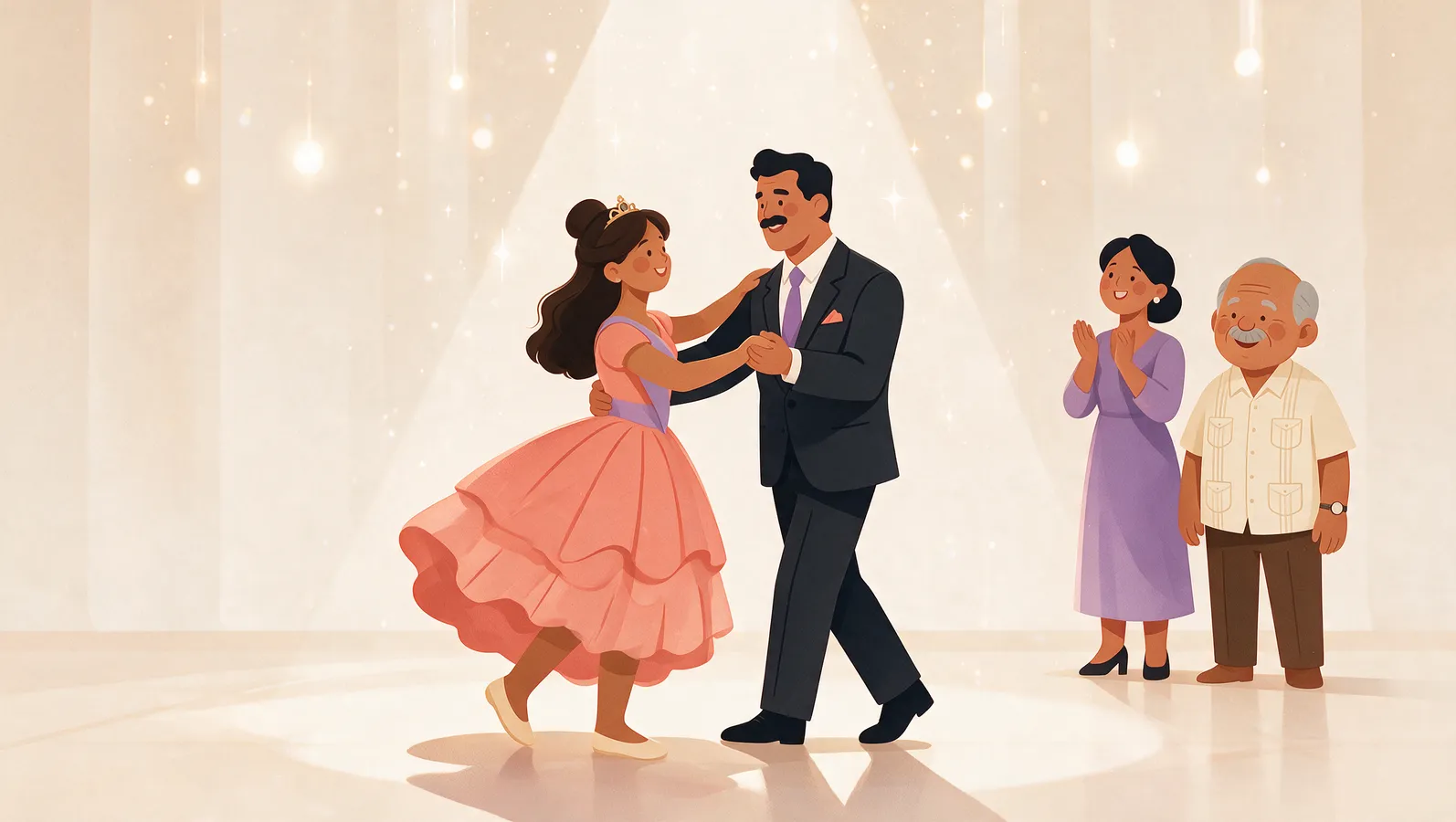
It's believed to come from ancient rites of passage in Mexico and Central America, blended with European society balls. Here's the story.
Why is the big party at 15, and not at 16 or 18? It might look like a random age, but the reason goes back further than you think. Behind the vals and the long gown there's a story where two worlds meet, and knowing it gives the celebration a whole new meaning.
A rite of passage with ancient roots
The custom is believed to come from the ancient peoples of Mexico and Central America. In those cultures, girls this age made the passage from childhood to womanhood through a special rite. It wasn't just a party: it was a way of recognizing that she was entering a new stage of life.
There isn't one single version of how it began, and the people who study it don't agree on every detail. But the idea of marking that passage with a special moment is what has carried through to today.
When the Spanish arrived
With the arrival of the Spanish, that custom blended with European balls where young women were presented to society. Many of the things you'd recognize at a quince today come from that blend:
- The vals, which for many families is the most emotional moment of the night.
- The long gown, which makes her feel like the star of the night.
- The presentation to family and guests, when everyone watches her step into this new stage.
That's why a quince feels both deeply ours and truly elegant: it's what happens when two traditions meet. And every family adds its own touch, with the music, the food and the customs it brings from home.
What about 16 or 18?
In other places, the age changes. Some people celebrate at 16, with a Sweet Sixteen, or even at 18. The age is different and the party may look different, but the meaning is the same: celebrating that she's starting a new chapter, surrounded by the people who love her.
If your family lives between two cultures, the question comes up naturally: quince or sweet sixteen? There's no wrong answer. What matters is choosing the celebration that means something to her and to your family.
How to make your quince meaningful
Knowing the history helps the party become more than a pretty event. It becomes a moment with meaning. A few ideas:
- Tell the quinceañera the story. Knowing where the tradition comes from helps her live her day with more pride.
- Pick the traditions that truly matter. You don't have to do them all. Keep the ones that mean something to your family.
- Ask the grandparents to share what parties were like in their day. It can be part of the toast or a short clip in the slideshow.
- Talk about the new chapter in the toast. A few words about what's ahead for her give the moment weight.
- Make the presentation a real presentation. Have the emcee say her full name, and keep her family close when she walks in.
- Keep a reminder of what it means. A letter from her parents about this new chapter, for her to read on the day of the party or save for when she's older.
In the end, whether it's at 15, 16 or 18, what you're celebrating is the same: a young woman starting to grow up, surrounded by her people. If you're planning the party, Sweetlify helps you organize all of it, from the guest list to the program. And you: did you have a quince, a sweet sixteen, or neither?