Is It Rude to Ask for Money on a Quinceañera Invitation?
· Myths & questions · 3 min read
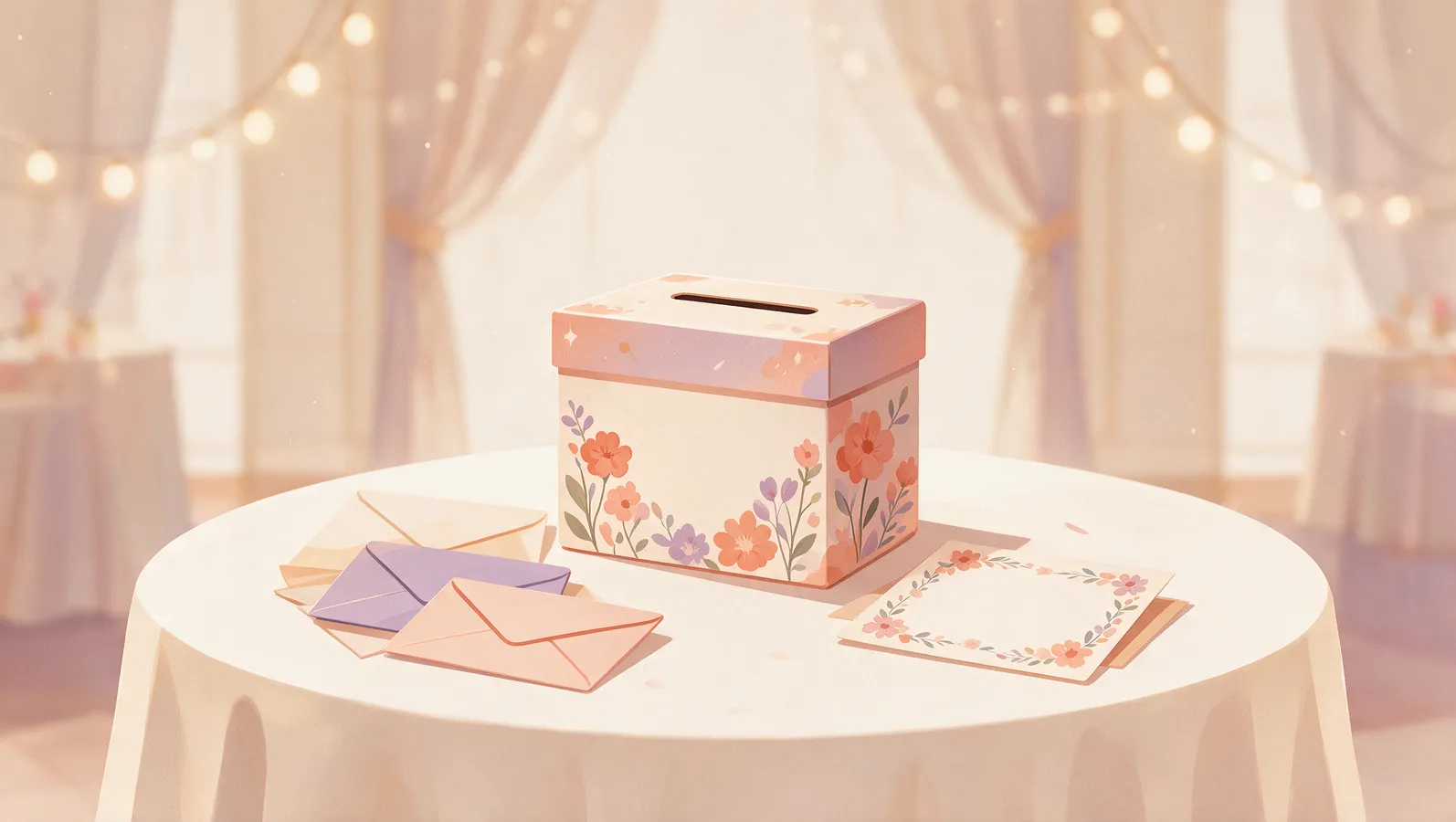
Many families prefer envelopes. The problem isn't asking, it's how you ask. Here's where to put it, plus a ready-to-use line for your invitation.
Is it rude to ask for money on a quinceañera invitation? It all comes down to one sentence. Asking for cash is very common these days, and many families would rather receive envelopes than gifts. The problem is almost never asking. It's how you ask. Here's how to do it kindly, with a ready-to-use line you can copy.
Why so many families prefer envelopes
A quince comes with a lot of expenses, and envelopes help cover the party or start a savings fund for her. Plus, many guests have no idea what to give a quinceañera, and an envelope takes the guesswork away. For the family, it's also more practical than ending up with duplicate gifts or things nobody will use.
So asking for money isn't the problem. The way you say it is.
What comes across as rude
What lands badly is writing it like an entry requirement: "cash only," in big letters, as if it were the ticket to get into the party. Guests end up feeling charged instead of invited.
A few other things that tend to land badly:
- Bringing up money at the top of the invitation, before the date or the venue.
- Using a bossy tone, like "please bring" or "no gifts accepted."
- Repeating the message several times or sending it separately as a reminder.
- Suggesting how much to give or hinting at what's "better" to bring.
Where to put it
The best approach is to say it warmly, in a single line at the end of the invitation or on the event page. By then, your guest has already read what matters: that you want them at your party, plus the date, time and place. The gift note becomes a small detail, not the headline.
If your invitation is digital, the event page is a natural spot for that line, next to the venue details and the RSVP. Here's how digital invitations with RSVP work.
The line that works
Here it is:
Your presence is our greatest gift. If you'd like to give us something, we'll have an envelope box.
And if your invitation is in Spanish:
Tu presencia es nuestro mejor regalo. Si deseas obsequiarnos algo, tendremos una caja de sobres.
It works because it leads with what matters most: they're welcome, gift or no gift. Then it shares the information without any pressure. Nobody feels obligated, and anyone who wants to help knows how.
A few tips for using it:
- Keep it the same font size as the rest of the text, never bigger.
- Place it at the end, after the party details.
- On the day of the party, set the envelope box somewhere visible and ask someone you trust to keep an eye on it.
If you'd rather do something else
An envelope box isn't the only way. Some families prefer a gift table, and others decide not to mention gifts at all. All of them are fine. What matters is that the invitation feels like what it is: an invitation to celebrate with you.
If you go with a gift table, use the same idea: one gentle line at the end, never at the top. If you'd rather say nothing, that's okay too. Anyone who wants to give something will ask the family, so let your parents, padrinos and close relatives know what you decided, so everyone gives the same answer.
While you put your invitation together, you can organize your guest list and the whole party in Sweetlify. Save the line for your invitation. And you, what would you put on yours: an envelope box, a gift table, or nothing?